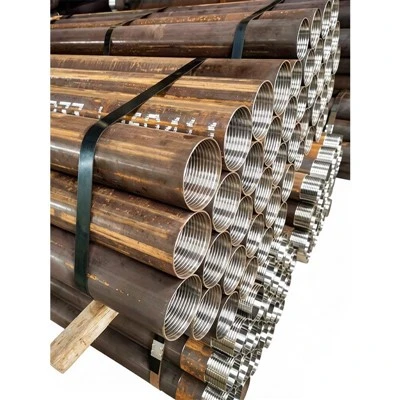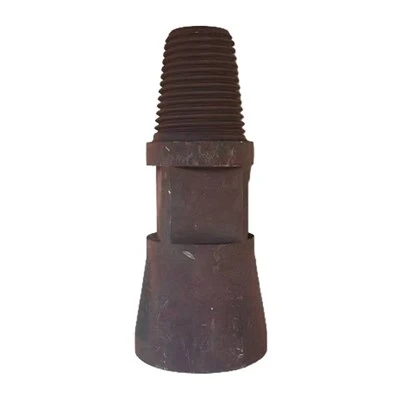
Hey there! As a supplier of Tube Well Casing Pipe, I often get asked about the flow capacity of these pipes. So, I thought I'd dive into this topic and share some insights with you all.
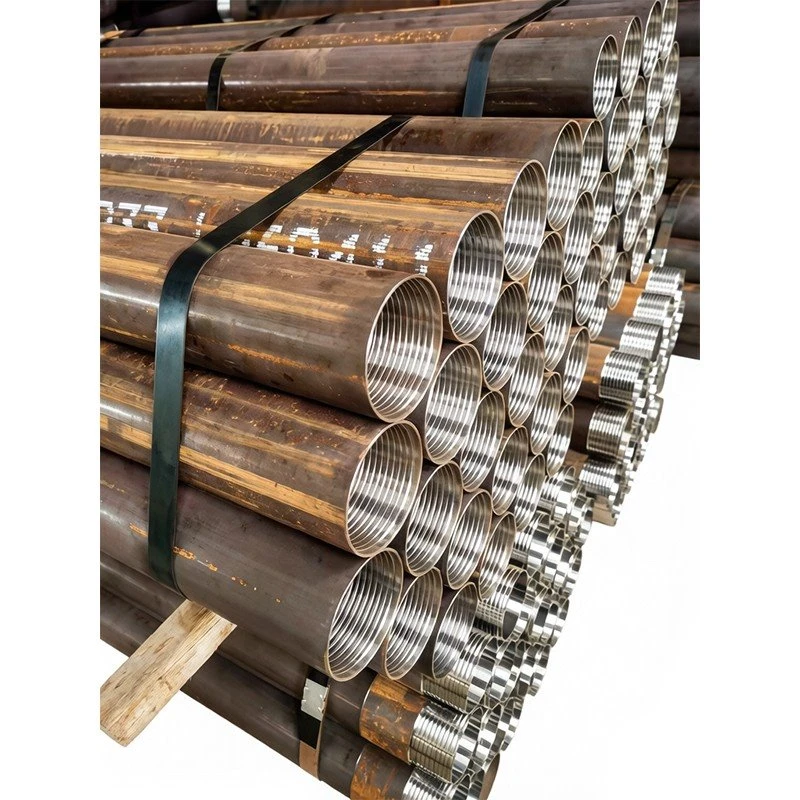
First off, let's understand what tube well casing pipes are. They're essential components in well - drilling operations. These pipes are used to line the wellbore, protecting it from collapse and preventing the contamination of the water or other fluids being extracted. Tube Well Casing Pipe comes in various materials, sizes, and specifications, each designed to meet different requirements.
The flow capacity of tube well casing pipe is a crucial factor. It determines how much fluid (usually water in most cases) can pass through the pipe per unit of time. There are several factors that influence this flow capacity.
Pipe Diameter
The diameter of the pipe is one of the most significant factors. A larger diameter pipe generally has a higher flow capacity. This is because a wider cross - sectional area allows more fluid to pass through. For example, if you compare a 4 - inch diameter tube well casing pipe with a 6 - inch diameter one, the 6 - inch pipe can carry a lot more water. It's like a highway; a wider highway can accommodate more cars at the same time. The relationship between the diameter and the flow capacity is not linear. A small increase in diameter can lead to a relatively large increase in the amount of fluid that can flow through the pipe.
Pipe Material
The material of the tube well casing pipe also plays a role in its flow capacity. Carbon Steel Casing Pipe is a popular choice. Steel pipes are strong and durable, but they can have some internal roughness. This roughness can cause friction as the fluid flows through the pipe, which in turn reduces the flow capacity. On the other hand, pipes made of materials like PVC (polyvinyl chloride) are generally smoother inside. The smooth surface results in less friction, allowing the fluid to flow more freely and increasing the flow capacity.
Pipe Length
The length of the pipe is another important factor. As the fluid travels through a longer pipe, it encounters more resistance. This resistance builds up over the length of the pipe, reducing the flow capacity. So, if you have a very long tube well casing pipe, you might notice a decrease in the amount of fluid that can flow through it compared to a shorter pipe of the same diameter and material.
Fluid Properties
The properties of the fluid being transported also affect the flow capacity. For instance, the viscosity of the fluid matters. Water is a relatively low - viscosity fluid, which means it flows easily. But if you're dealing with a more viscous fluid, like oil, the flow capacity will be lower. Oil has a higher resistance to flow, and it requires more energy to move it through the pipe. This is why Oil Casing Pipe and Oil Well Casing Pipe are designed with different considerations compared to those used for water extraction.
Calculating Flow Capacity
There are several methods to calculate the flow capacity of tube well casing pipes. One of the most common methods is using the Darcy - Weisbach equation. This equation takes into account factors like the pipe diameter, length, friction factor, and the head loss. The friction factor depends on the pipe material and the flow regime (whether the flow is laminar or turbulent).
For laminar flow, the friction factor can be calculated using the formula (f = \frac{64}{Re}), where (Re) is the Reynolds number. The Reynolds number is a dimensionless quantity that helps determine the flow regime. It's calculated as (Re=\frac{\rho vD}{\mu}), where (\rho) is the density of the fluid, (v) is the velocity of the fluid, (D) is the diameter of the pipe, and (\mu) is the dynamic viscosity of the fluid.
In turbulent flow, the friction factor is more complex to calculate and often requires the use of empirical correlations or Moody's chart.
Let's take an example. Suppose we have a 6 - inch diameter carbon steel tube well casing pipe that is 100 feet long. We're using it to extract water. The water has a density of about 62.4 lb/ft³ and a dynamic viscosity of about (2.34\times10^{- 5}) lb - s/ft². If the velocity of the water is 5 feet per second, we can first calculate the Reynolds number.
(Re=\frac{\rho vD}{\mu}=\frac{62.4\times5\times(6/12)}{2.34\times10^{-5}}\approx6.67\times10^{5})
Since (Re>4000), the flow is turbulent. We can then use Moody's chart to find the friction factor. Let's assume the friction factor (f = 0.02)

The Darcy - Weisbach equation for head loss (h_f=f\frac{L}{D}\frac{v^{2}}{2g}), where (L) is the length of the pipe, (D) is the diameter, (v) is the velocity, and (g) is the acceleration due to gravity ((g = 32.2) ft/s²)
(h_f=0.02\times\frac{100}{(6/12)}\times\frac{5^{2}}{2\times32.2}\approx1.55) feet
The flow rate (Q) can be calculated using the formula (Q = A\times v), where (A=\frac{\pi D^{2}}{4})
(A=\frac{\pi\times(6/12)^{2}}{4}\approx0.196) ft²
(Q = A\times v=0.196\times5 = 0.98) ft³/s
This is a simplified example, and in real - world scenarios, there are many other factors to consider, such as the presence of bends, valves, and changes in elevation.
Importance of Flow Capacity in Different Applications
In water well applications, the flow capacity of the tube well casing pipe determines how much water can be extracted for domestic, agricultural, or industrial use. If the flow capacity is too low, it might not be able to meet the demand. For example, in an agricultural setting, if you need a large amount of water for irrigation, a pipe with a low flow capacity won't be sufficient.
In oil and gas wells, the flow capacity is crucial for efficient production. A higher flow capacity means more oil or gas can be extracted in a given time, increasing the productivity of the well. This is why Borewell Drilling Pipe used in these applications is carefully designed to optimize the flow capacity.
Conclusion
So, as you can see, the flow capacity of tube well casing pipe is influenced by multiple factors. Understanding these factors is essential for choosing the right pipe for your specific application. Whether you're in the water well business, oil and gas industry, or any other field that requires fluid extraction, getting the flow capacity right can make a big difference in the efficiency and success of your operations.
If you're looking for high - quality tube well casing pipes, we're here to help. We offer a wide range of pipes in different materials, sizes, and specifications to meet your needs. Feel free to reach out to us for more information and to discuss your procurement requirements. We're always happy to have a chat and find the best solution for you.
References
- "Fluid Mechanics" by Frank M. White
- "Introduction to Chemical Engineering Fluid Mechanics" by Darryl L. Seader, Ernest J. Henley, and John D. Roper