What is the fatigue life of a transition joint under cyclic loading?
In the realm of industrial engineering, particularly in the oil and gas, mining, and construction sectors, transition joints play a pivotal role. As a dedicated transition joint supplier, I've witnessed firsthand the critical importance of understanding the fatigue life of these components. Cyclic loading is a common phenomenon in many applications where transition joints are used, and comprehending its impact on fatigue life is essential for ensuring the reliability and safety of the entire system.
Understanding Transition Joints
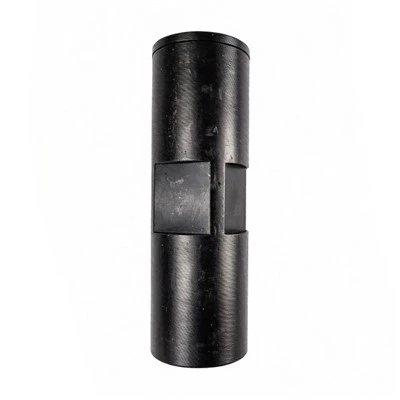
Before delving into the fatigue life under cyclic loading, let's first define what transition joints are. Transition joints, also known as drill string transition adapters, are mechanical connectors designed to join two different types of pipes or components with varying diameters, threads, or materials [1]. They act as a bridge between dissimilar parts, allowing for seamless transfer of loads and fluids. Some common types of transition joints include Reduced Section Sub, Drill Stem Sub, Swivel Sub, and Drill Rod Adapter.
These joints are used in a wide range of applications. In the oil and gas industry, for example, they are crucial components in drill strings, connecting drill pipes of different sizes and specifications. In mining operations, transition joints are used to connect drilling equipment to the drill rods, enabling efficient and reliable drilling. In construction, they are used in foundation piling and other operations where different pipe sections need to be joined.
Cyclic Loading and Its Effects
Cyclic loading refers to the repeated application of a load, which can be tensile, compressive, or shear, on a material or component. In the context of transition joints, cyclic loading can occur due to various factors. In drilling operations, for example, the rotation of the drill string, the vibration caused by the drilling process, and the changes in fluid pressure can all contribute to cyclic loading.
When a transition joint is subjected to cyclic loading, it experiences stress variations. These stress variations can lead to the initiation and propagation of cracks within the joint material over time. The cyclic nature of the loading means that small cracks can gradually grow, eventually reaching a critical size where the joint fails. This process is known as fatigue failure.
The effects of cyclic loading on a transition joint are influenced by several factors. The magnitude of the applied load is a crucial factor. Higher loads generally lead to faster crack initiation and propagation, reducing the fatigue life of the joint. The frequency of the cyclic loading also plays a role. Higher frequencies can cause more rapid material degradation due to the increased number of stress cycles in a given time period. Additionally, the type of loading (tensile, compressive, or shear) can affect the fatigue behavior of the joint, as different loading modes induce different stress distributions within the material.
Factors Affecting the Fatigue Life of Transition Joints
The fatigue life of a transition joint under cyclic loading is determined by multiple factors, and understanding these factors is key to predicting and improving the joint's performance.
Material Properties: The material from which the transition joint is made has a significant impact on its fatigue life. Different materials have different fatigue resistance capabilities. For example, high - strength steels are often used in transition joints in the oil and gas industry because of their excellent strength and relatively good fatigue resistance. The microstructure of the material also matters. A uniform and fine - grained microstructure generally provides better resistance to crack initiation and propagation compared to a coarse - grained structure.
Geometry and Design: The geometry of the transition joint can influence its fatigue life. Stress concentrations can occur at areas of abrupt changes in cross - section, such as at the threads or the transition region between different diameters. Design features such as smooth transitions, proper fillet radii, and optimized thread profiles can help reduce stress concentrations and improve fatigue performance. For instance, a well - designed Drill String Transition Adapter with carefully engineered geometries can withstand more cyclic loading cycles before failure.
Surface Finish: The surface finish of the transition joint is another important factor. A rough surface can act as a stress raiser, promoting crack initiation. A smooth surface finish, on the other hand, reduces the likelihood of crack formation and can enhance the fatigue life of the joint. Surface treatments such as polishing and coating can be applied to improve the surface finish and protect the joint from corrosion, which can also accelerate fatigue failure.


Operating Conditions: The environmental and operating conditions under which the transition joint operates can significantly affect its fatigue life. Exposure to corrosive environments, such as saltwater or acidic fluids in the oil and gas industry, can weaken the material and accelerate crack growth. High temperatures can also reduce the fatigue resistance of the material. Additionally, the presence of contaminants or debris in the operating environment can cause abrasive wear, further reducing the joint's integrity.
Measuring and Predicting Fatigue Life
To ensure the reliability of transition joints, it is necessary to measure and predict their fatigue life. There are several methods available for this purpose.
Experimental Testing: One of the most direct ways to determine the fatigue life of a transition joint is through experimental testing. This involves subjecting a sample of the joint to cyclic loading in a laboratory setting using a testing machine. The number of cycles until failure is recorded, and this data can be used to establish the fatigue life curve of the joint. Different loading conditions, such as load magnitude and frequency, can be simulated to understand how they affect the fatigue behavior. However, experimental testing can be time - consuming and expensive, especially when testing large - scale or complex transition joints.
Finite Element Analysis (FEA): FEA is a powerful numerical method that can be used to predict the fatigue life of transition joints. By creating a detailed 3D model of the joint and applying the appropriate boundary conditions and loading scenarios, FEA software can calculate the stress and strain distributions within the joint. Based on these results, fatigue analysis algorithms can be used to estimate the number of cycles until failure. FEA allows for the evaluation of different design options and material properties without the need for extensive physical testing, making it a cost - effective and efficient tool for fatigue life prediction.
Improving the Fatigue Life of Transition Joints
As a transition joint supplier, we are committed to providing high - quality products with long fatigue lives. There are several strategies we can employ to achieve this goal.
Material Selection and Improvement: Continuously researching and selecting the most suitable materials for transition joints is crucial. We can work with material suppliers to develop new alloys or improve existing materials to enhance their fatigue resistance. Heat treatment processes can also be optimized to improve the material's microstructure and mechanical properties.
Design Optimization: Our engineering team focuses on optimizing the design of transition joints to reduce stress concentrations. This includes using advanced design techniques such as topology optimization and parametric design. By carefully considering the geometry and dimensions of the joint, we can ensure that the stress distribution is more uniform, thereby increasing the fatigue life.
Surface Treatment and Coating: Applying appropriate surface treatments and coatings can significantly improve the fatigue life of transition joints. For example, nitriding or carburizing can increase the surface hardness and wear resistance of the joint, while corrosion - resistant coatings can protect the joint from environmental damage.
Conclusion
In conclusion, the fatigue life of a transition joint under cyclic loading is a complex issue that is influenced by multiple factors, including material properties, geometry, surface finish, and operating conditions. Understanding these factors and using appropriate methods to measure and predict fatigue life is essential for ensuring the reliability and safety of transition joints in various industrial applications.
As a leading transition joint supplier, we are dedicated to providing high - quality products with long fatigue lives. Our commitment to research and development, combined with our expertise in material selection, design optimization, and surface treatment, allows us to offer transition joints that can withstand the rigors of cyclic loading.
If you are in need of high - performance transition joints for your projects, we invite you to contact us for a detailed discussion. Our team of experts is ready to assist you in selecting the right products and providing customized solutions to meet your specific requirements.
References
[1] Smith, J. D. (2018). Handbook of Drill String Components. Elsevier.