Drilling fluid, often referred to as drilling mud, plays a crucial role in the drilling process. As a drill pipe supplier, understanding the inflow and outflow characteristics of drilling fluid in drill pipes is essential for providing high - quality products and solutions to our customers. In this blog, we will explore these characteristics in detail.
Inflow Characteristics of Drilling Fluid in Drill Pipes
1. Flow Rate and Pressure
The inflow of drilling fluid into the drill pipe is primarily controlled by the pump at the surface. The pump generates a certain flow rate and pressure to push the fluid down the drill pipe. The flow rate is typically measured in barrels per minute (bbl/min) or cubic meters per hour (m³/h). A higher flow rate is required for deeper wells or when dealing with larger cuttings.
The pressure at the pump outlet must be sufficient to overcome the frictional resistance inside the drill pipe and the hydrostatic pressure of the fluid column in the wellbore. The frictional resistance is influenced by factors such as the diameter of the drill pipe, the length of the drill string, and the viscosity of the drilling fluid. For example, a smaller - diameter drill pipe will have a higher frictional resistance, requiring a higher pump pressure to maintain the desired flow rate.
2. Viscosity and Rheology
The viscosity of the drilling fluid is a key factor in its inflow characteristics. Viscosity refers to the fluid's resistance to flow. A high - viscosity drilling fluid can carry cuttings more effectively but may require more energy to pump. On the other hand, a low - viscosity fluid has lower frictional resistance but may not be as efficient in suspending cuttings.
Rheology, which describes the flow behavior of the fluid under different conditions, is also important. Drilling fluids often exhibit non - Newtonian behavior, such as Bingham plastic or power - law behavior. Understanding the rheological properties of the fluid helps in predicting its inflow behavior and optimizing the pump performance.
3. Inflow Distribution
In a multi - drill - pipe system, the inflow of drilling fluid may not be evenly distributed among all the pipes. Factors such as the pipe's position in the drill string, the presence of restrictions or blockages, and the fluid's properties can affect the inflow distribution. For example, if a drill pipe has a partial blockage, the fluid will preferentially flow through the unblocked pipes, leading to an uneven inflow.
Outflow Characteristics of Drilling Fluid in Drill Pipes
1. Cuttings Transport
One of the main functions of the outflow of drilling fluid is to transport cuttings from the bottom of the well to the surface. The ability of the fluid to carry cuttings depends on its velocity, viscosity, and density. A higher fluid velocity provides more kinetic energy to lift the cuttings, while a higher viscosity helps in suspending the cuttings in the fluid.
The shape and size of the cuttings also play a role in the outflow characteristics. Larger and irregularly shaped cuttings are more difficult to transport compared to smaller and more spherical ones. The drill pipe's inner diameter and the annular space between the drill pipe and the wellbore wall also affect the cuttings transport efficiency.
2. Pressure Drop
As the drilling fluid flows out of the drill pipe and through the annular space, there is a pressure drop. This pressure drop is caused by frictional resistance between the fluid and the drill pipe wall, as well as the wellbore wall. The pressure drop can be calculated using various fluid flow models, such as the Darcy - Weisbach equation.
A significant pressure drop can affect the wellbore stability and the overall drilling performance. If the pressure drop is too high, it may cause the wellbore to collapse or lead to lost circulation. Therefore, it is important to control the outflow pressure and ensure that it remains within a safe range.
3. Fluid Return and Separation
Once the drilling fluid reaches the surface, it needs to be separated from the cuttings and other contaminants. The fluid return rate is an important parameter that indicates the efficiency of the drilling process. A low fluid return rate may indicate problems such as lost circulation or blockages in the drill pipe or the wellbore.
Separation of the cuttings from the drilling fluid is typically done using a series of shale shakers, hydrocyclones, and centrifuges. The quality of the separated fluid is crucial for its reuse in the drilling process. If the fluid is not properly separated, it may cause damage to the drilling equipment and affect the drilling performance.
Impact of Drill Pipe Types on Inflow and Outflow Characteristics
1. Matrix Drill Pipe
Matrix Drill Pipe is designed to provide high strength and durability. Its smooth inner surface reduces frictional resistance, which is beneficial for both the inflow and outflow of drilling fluid. The reduced frictional resistance allows for a more efficient flow of the fluid, reducing the pump pressure required and improving the cuttings transport efficiency.
2. Dth Drill Pipe
Dth Drill Pipe is commonly used in down - the - hole drilling applications. It has a unique design that allows for the efficient delivery of the drilling fluid to the drill bit. The inflow of the fluid is optimized to provide the necessary power for the DTH hammer, while the outflow is designed to effectively remove the cuttings from the wellbore.

3. Welding Drill Pipe
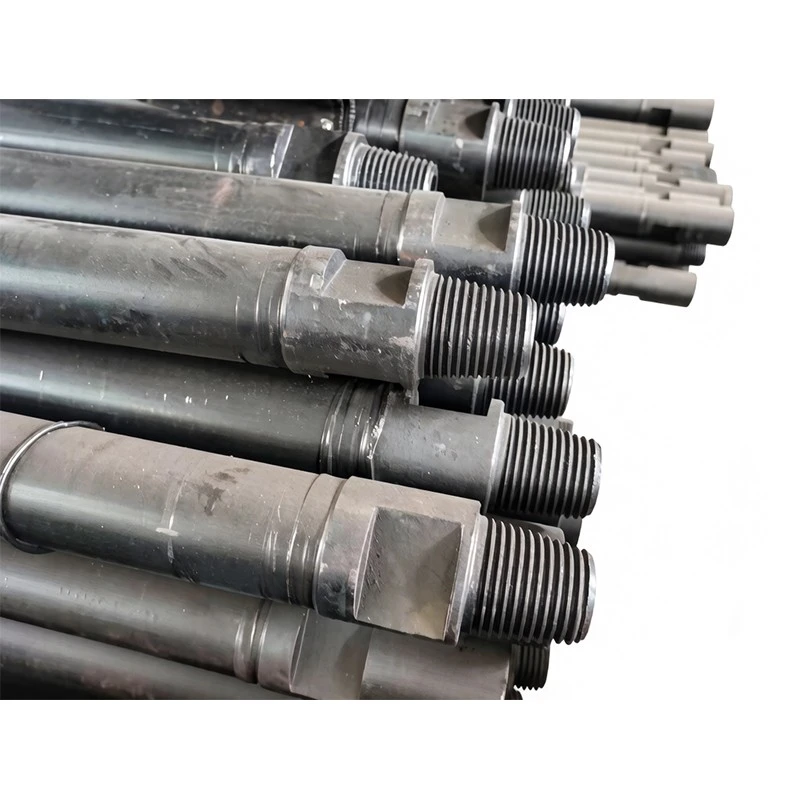
Welding Drill Pipe is often used in situations where a long drill string is required. The welding process can affect the inner surface of the drill pipe, potentially increasing the frictional resistance. However, proper welding techniques and surface treatments can minimize this effect and ensure a smooth flow of the drilling fluid.
4. Directional Drill Pipe
Directional Drill Pipe is designed for drilling wells at an angle. The inflow and outflow characteristics of the drilling fluid in directional drill pipes are more complex compared to vertical drill pipes. The fluid needs to flow through curved sections of the drill pipe, which can increase the frictional resistance and affect the cuttings transport. Special design features are incorporated into directional drill pipes to optimize the fluid flow.
5. Reverse Circulation Drill Pipe
Reverse Circulation Drill Pipe operates on a different principle compared to conventional drill pipes. In reverse circulation, the drilling fluid flows down the annular space and returns up through the drill pipe, carrying the cuttings with it. This design provides a more efficient way of transporting cuttings, especially in large - diameter wells.
Importance of Understanding Inflow and Outflow Characteristics for Drill Pipe Suppliers
As a drill pipe supplier, having a deep understanding of the inflow and outflow characteristics of drilling fluid in drill pipes allows us to design and manufacture products that meet the specific needs of our customers. We can optimize the inner diameter, wall thickness, and surface finish of the drill pipes to reduce frictional resistance and improve the flow efficiency.
We can also provide technical support to our customers, helping them select the right type of drill pipe for their drilling operations. By understanding the fluid flow characteristics, we can assist in troubleshooting problems such as lost circulation, poor cuttings transport, and high pump pressure.
Contact for Purchase and Consultation
If you are interested in our drill pipes and would like to discuss your specific requirements, we invite you to contact us. Our team of experts is ready to provide you with detailed information and assist you in making the right choice for your drilling projects.
References
- Bourgoyne, A. T., Chenevert, M. E., Millheim, K. K., & Young, F. S. (1986). Applied Drilling Engineering. Society of Petroleum Engineers.
- Darley, H. C. H., & Gray, G. R. (1988). Composition and Properties of Drilling and Completion Fluids. Gulf Publishing Company.
- API Recommended Practice 13B - 1. (2010). Standard Practice for Field Testing of Oil - Based Drilling Fluids. American Petroleum Institute.